Why snow differs on the slopes in the Rockies, Sierra and Northeast
Snow tends to be drier in the Rockies and wetter in the Sierra. Here's what that means for your next trip.

Why location (and the weather) matters for snow quality on the slopes
Try packing a snowball in Colorado, Lake Tahoe or Vermont and you might notice something different.
Some snow is light and powdery while other snow is heavy and wet and sticks together easily. It all comes down to the temperature and moisture in the atmosphere, which vary by location.
(MORE: Why a powder day isn't just hype: the weather behind perfect snow)

How snow differs by region
A study published in 2005 used about 30 years of data to compare snow-to-water ratios across the U.S. — that is, how many inches of snowfall for every 1 inch of melted water.
Where that ratio is higher, the snow is lighter. Denver/Boulder averaged 15.1 inches of snow per inch of water, Salt Lake City 14.2 inches per inch, Burlington, Vermont, 13.4 inches per inch, and Reno, Nevada — the closest station to Lake Tahoe — just 12.5 inches per inch.
The Rockies
The Rocky Mountains are famous for their dry, powder snow. Denver/Boulder’s 15.1 ratio reflects the colder temperatures and generally lower moisture content typical of the region, which produces those pristine conditions.
Get More of Our News on Google
Set The Weather Company as a 'Preferred Source' to get quicker access to the news you value.

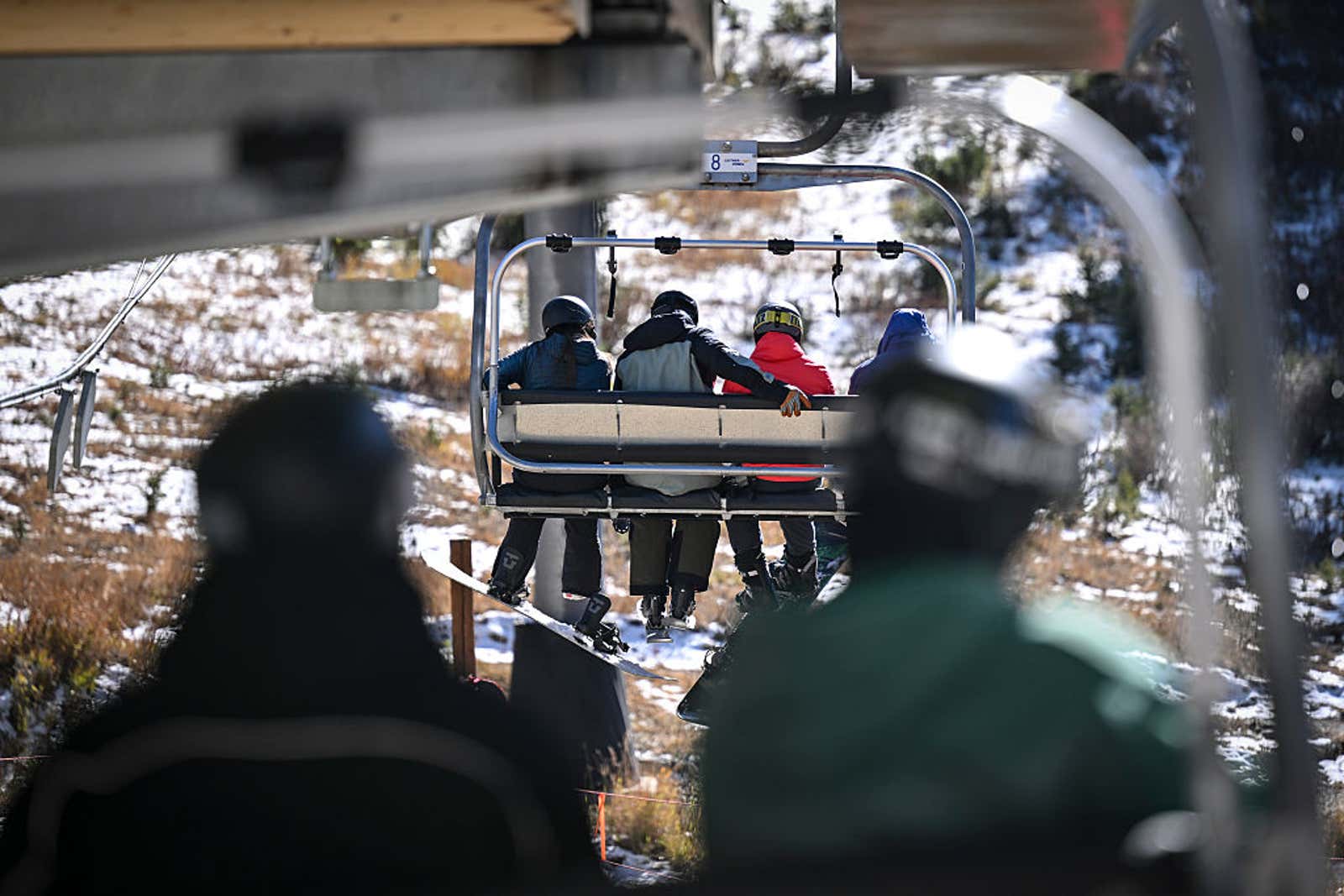
Snow sports enthusiasts board the Black Mountain Express during opening day at Arapahoe Basin on Wednesday, Oct. 28, 2026.
(Aaron Ontiveroz/Getty Images)
The Sierra
Farther west, the Sierra Nevada experiences a different kind of snowfall. Storms from the Pacific carry significant moisture, especially during atmospheric river events, and the Reno area’s 12.5 ratio shows how much water that snow holds compared to the Rockies.
This often produces heavier, wetter snow sometimes called “Sierra cement.”
(MORE: Snowstorm helps California's Mammoth Mountain open ski season early)
The Northeast
Snow conditions change dramatically from one storm to the next.
Burlington’s 13.4 ratio puts Vermont’s snow in between the Rockies and the Sierra, but temperatures often fluctuate around freezing, so one storm can bring a foot of powder while the next brings a wintry mix.
(MORE: 2026-27 opening dates for Vermont's ski resorts)
What’s different this winter?
El Niño can shift winter storm tracks to influence temperatures and precipitation patterns across the U.S., but its effects are not equal. In the Northeast, milder conditions can increase the likelihood of rain. Across the West, changes in storm tracks influence where the heaviest snow falls.
When planning your next trip, remember no two winters or storms are exactly alike. Even within the same mountain range, elevation, temperature and humidity influence storm tracks.
Check out our winter outlook page for more.
Faiza Mohammed is a meteorologist intern at weather.com. She studied geography and worked with the Weather Dawgs team at the University of Georgia. She also received her master's in Earth and Atmospheric Sciences from the Georgia Institute of Technology.
Loading comments...