How space trash could affect weather, ozone and your forecast
Falling satellite debris may shift polar winds and affect ozone, while orbital junk could threaten weather satellites.

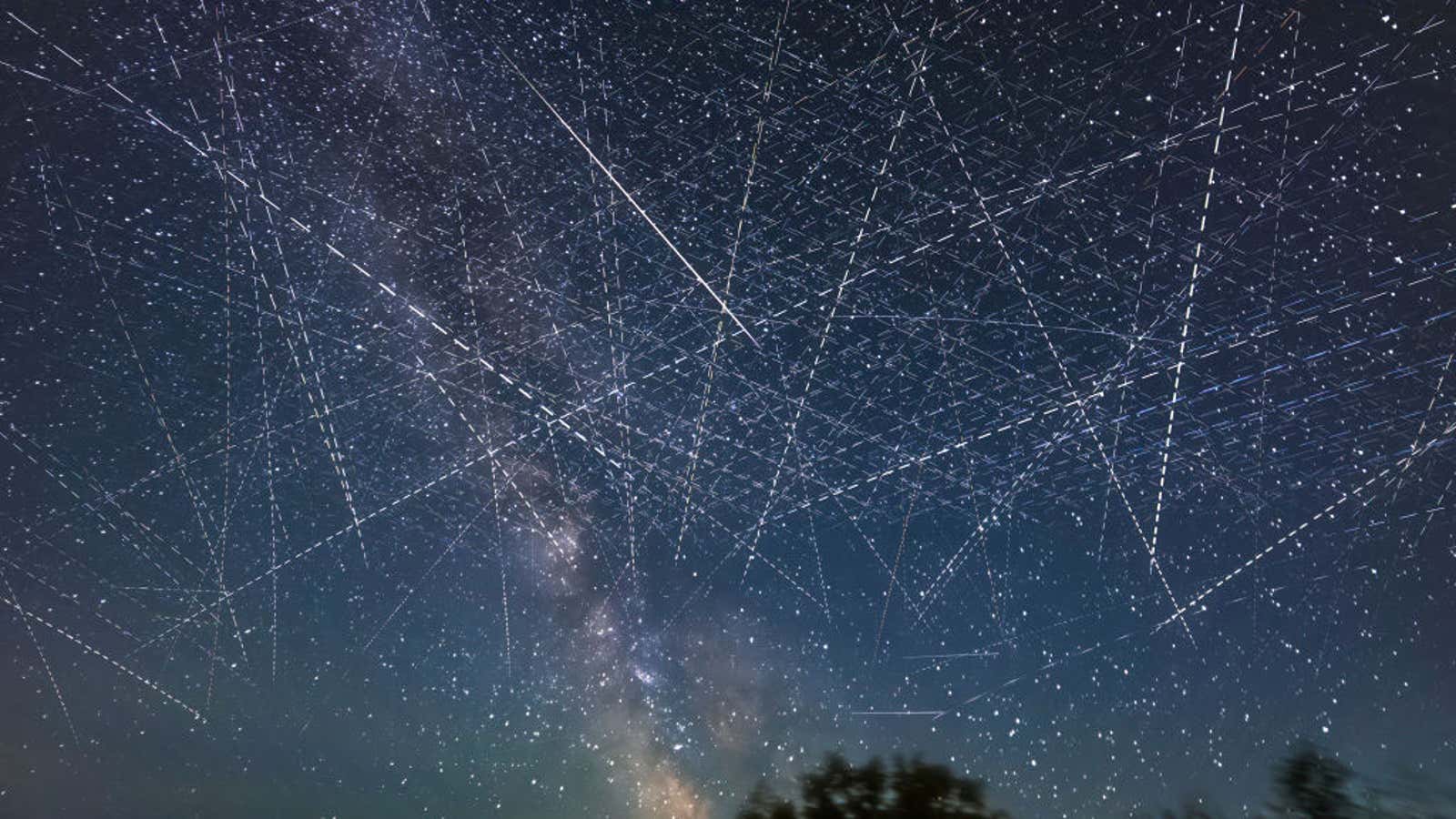
The satellite-filled sky.
(VWPics/Universal Images Group vi)
Look up on a clear night and you might catch a satellite streaking across the sky, one of tens of thousands of man-made objects now circling Earth. But not everything up there is working.
Dead satellites, spent rocket parts and stray bits of metal and paint are piling up in orbit, and scientists say the growing clutter is starting to collide with something closer to home: our weather.
What is space trash?
Space trash consists of human-made, non-functional objects left by humans in space, which often become trapped in orbit.

It can be an object as big as a dead satellite or a fleck of paint from a rocket.
Most space trash is moving very fast — it can reach speeds of 18,000 mph, almost seven times faster than a bullet. And any piece of debris larger than 1 centimeter in diameter — about the size of a small green pea — can be dangerous.
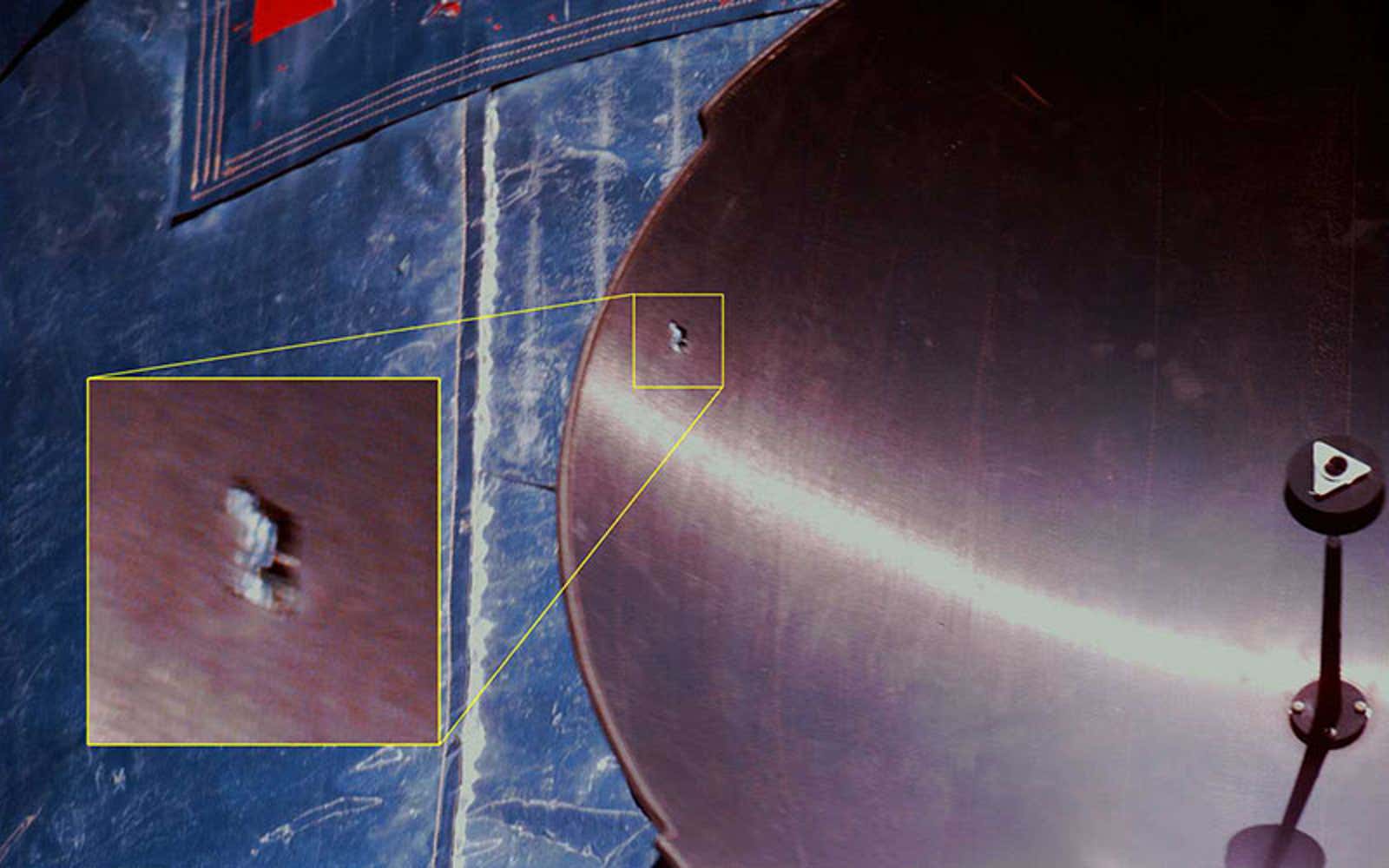
An impact from space debris that completely penetrated the antenna dish of the Hubble Space Telescope.
(NASA)
Satellites, which do things like track weather and provide communication services on Earth, make up an important part of space trash.
Get More of Our News on Google
Set The Weather Company as a 'Preferred Source' to get quicker access to the news you value.

More satellites have been launched into Earth’s orbit in the past five years than the previous 60 years combined. There are now more than 16,000 active satellites overhead. U.S. constellations alone could top 60,000 by 2040, a government projection cited in a recent study found.
Most satellites are located within low Earth orbit, or around 100 to 1,243 miles above the planet’s surface.
We’ve engineered these satellites to essentially naturally clean themselves up in the atmosphere. Normally when these satellites reach the end of their lifespans, natural atmospheric drag pulls them down to lower altitudes. Air molecules there cause them to burn up and disintegrate before ever reaching the Earth’s surface.
But when these satellites burn up, they do release pollution into Earth’s atmosphere, including aluminum oxide, or alumina, formed when the metal vaporizes and reacts with oxygen.
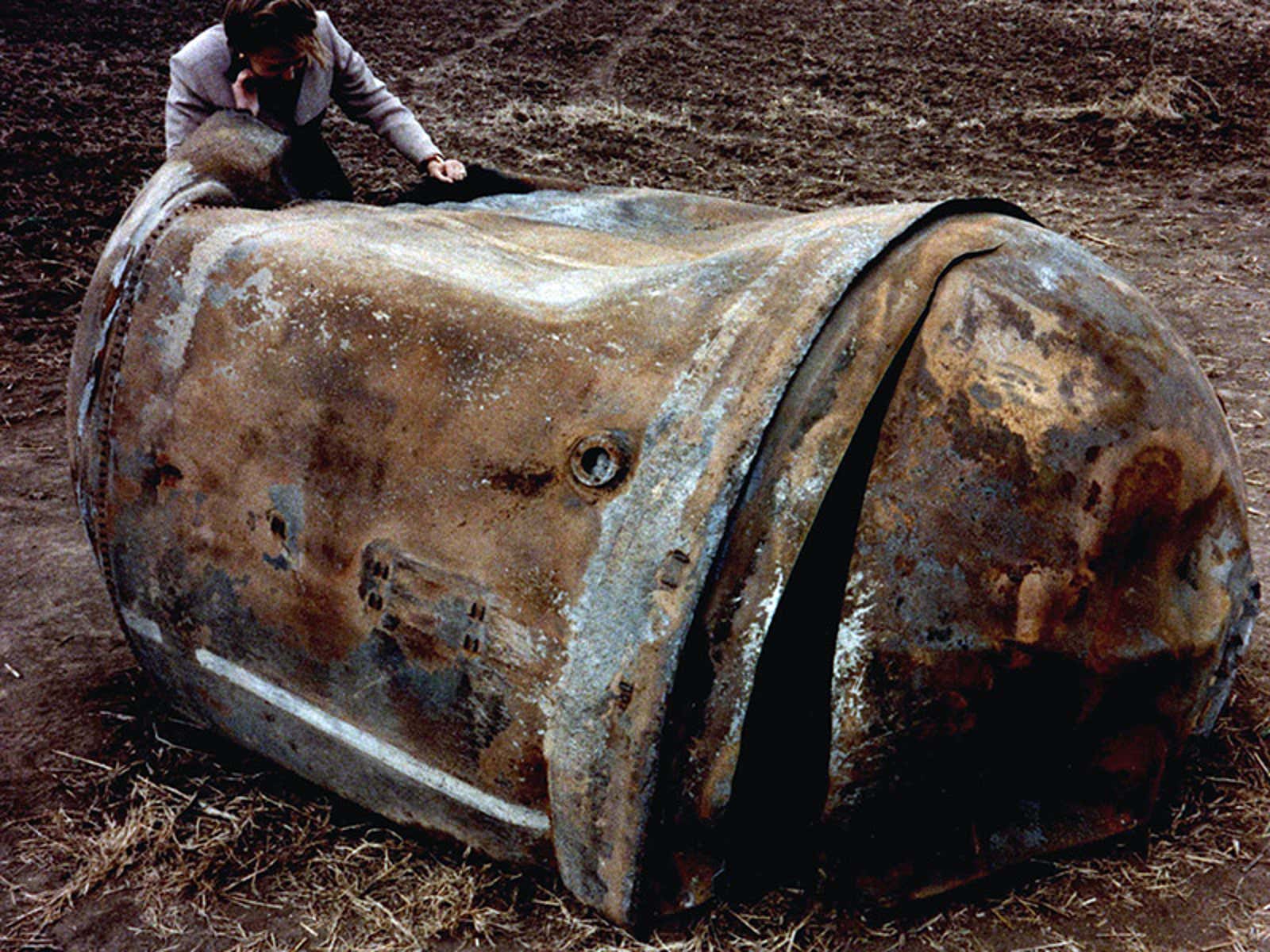
The main propellant tank of the second stage of a Delta 2 launch vehicle which landed near Georgetown, Texas, on Jan. 22, 1997.
(NASA ODPO)
How space trash could change the climate
One study in the Journal of Geophysical Research Atmospheres tested how this release of pollution could affect Earth.
It modeled a scenario where 10,000 metric tons of alumina get released into the atmosphere each year from falling space debris.
Researchers project that by 2040, once satellite reentries reach that pace, 20,000 to 40,000 metric tons of alumina would build up near the poles, in both the Northern and Southern Hemispheres, at altitudes of about 6 to 19 miles.
That buildup causes small changes in how the upper atmosphere absorbs heat, which in turn would create a 2.7 degree Fahrenheit temperature swing at Southern Hemisphere high latitudes.
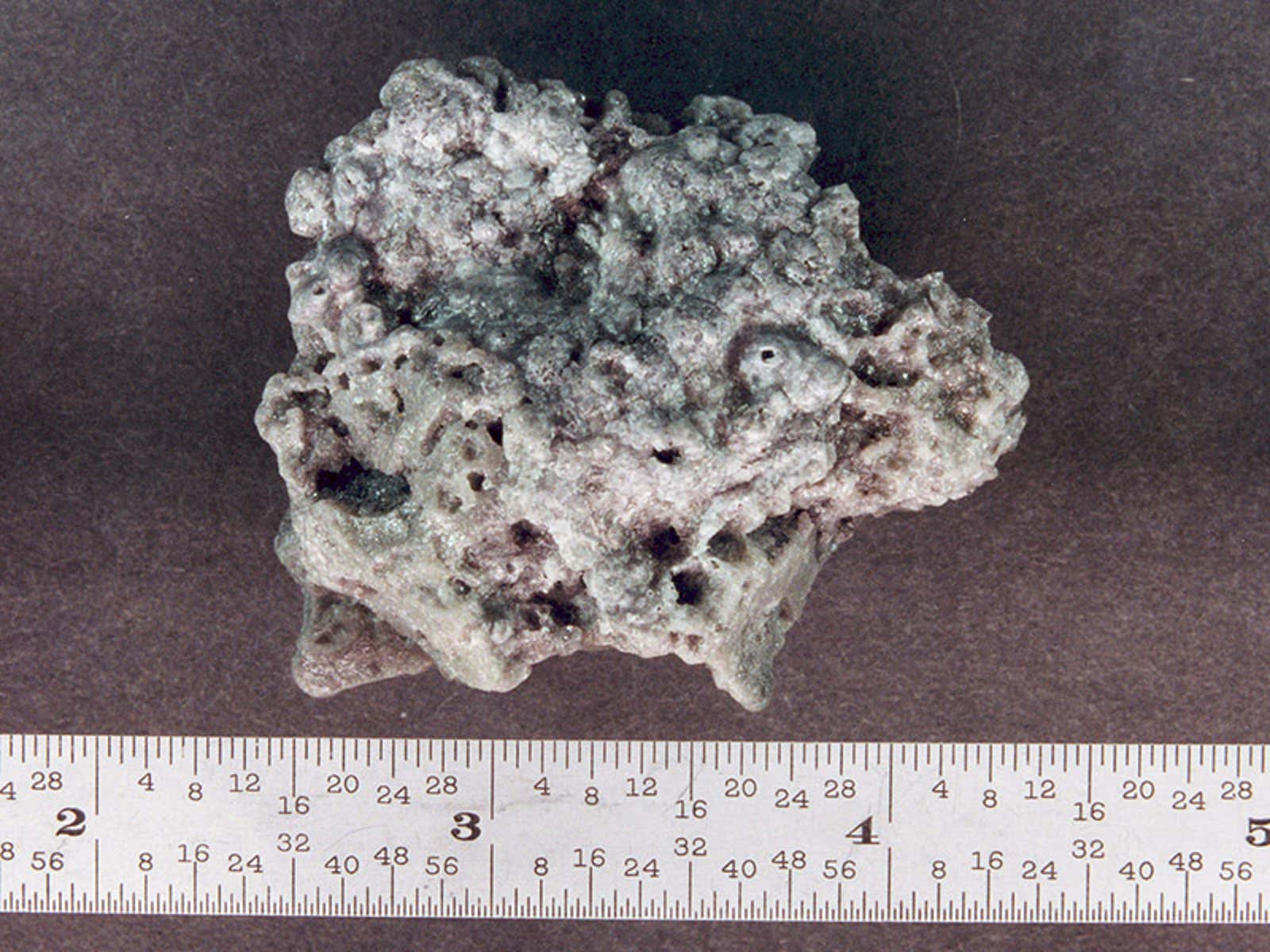
Solid rocket motor (SRM) slag. Aluminum oxide slag is a byproduct of SRMs.
(NASA)
Those temperature changes could then shift wind speeds in the polar vortex, the scientists concluded.
The polar vortex is a big swirling air pattern that influences winter weather. Destabilizing the polar vortex could potentially contribute to extreme winter weather events at mid-latitudes.
Effects to the ozone layer and weather forecasting
There are two other notable weather relevant effects this space trash can have.
The Earth's ozone layer acts as a natural protection from the sun's harmful radiation. Pollution has already caused the ozone to become depleted and damaged.
The pollution released from space trash as it burns up, aluminum dust, can also harm the ozone layer.
The same study that modeled the polar vortex changes linked them to a weaker springtime ozone hole in the Southern Hemisphere.
Meteorologists also rely on active satellites to track developing storms, measure ocean temperature and map severe weather systems.
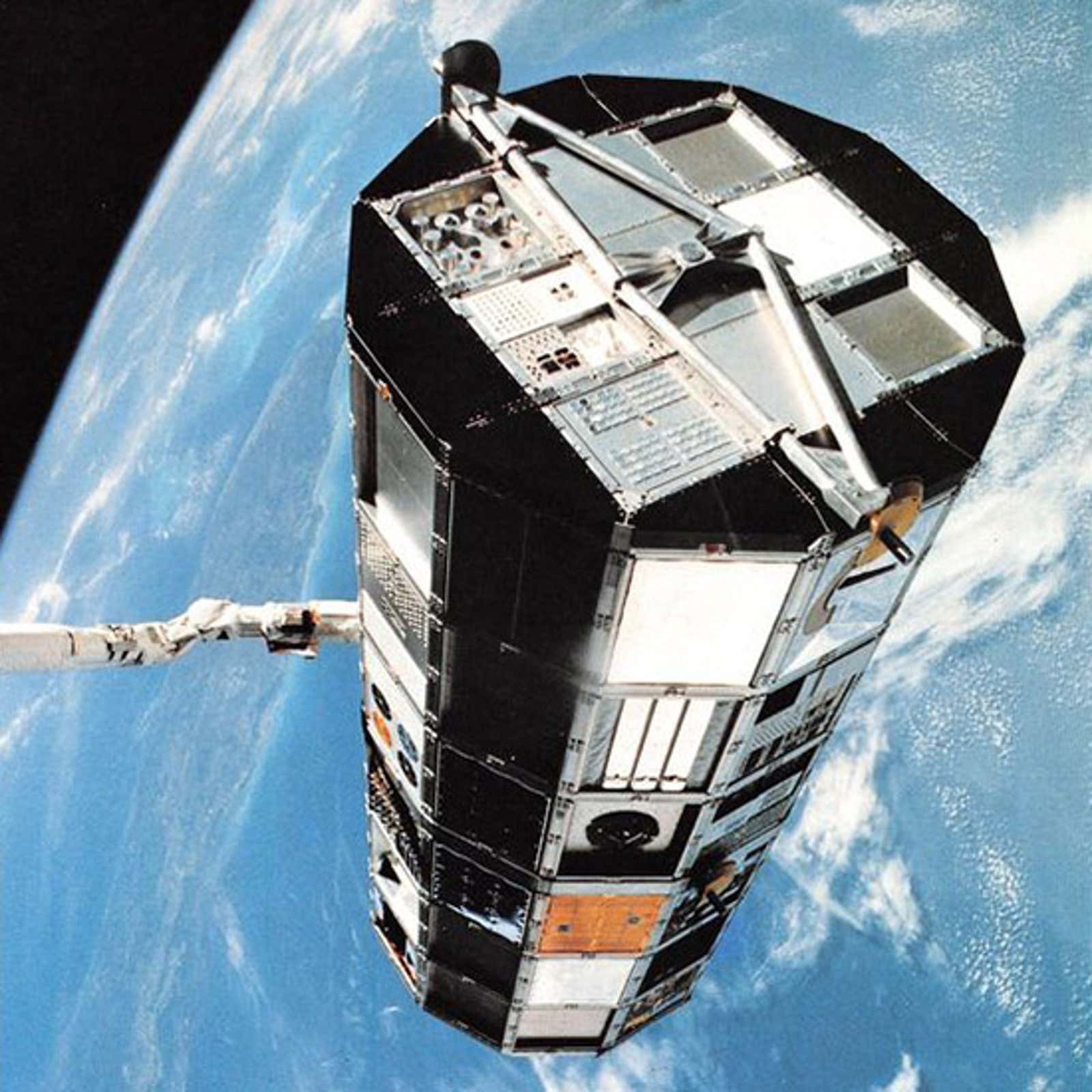
Long Duration Exposure Facility (LDEF) that was left in low Earth orbit for 5.7 years before being retrieved by space shuttle Columbia in January 1990.
(NASA)
But if a piece of this space junk were to collide with an operational weather satellite, it could abruptly cut off real-time data feeds.
For example, NASA’s Aqua satellite can detect wildfires via infrared sensors — like it did with the January 2025 Palisades wildfire in California.
But NASA’s own logs show multiple instances where this fire-tracking data had errors specifically because the satellite had to maneuver to dodge incoming space debris, creating gaps in coverage at potentially critical moments.
Every evasive maneuver burns fuel, a finite resource. From 2005 to 2018, the three core Earth Observing System satellites (Aqua, Terra, Aura) — which track wildfires, storms, deforestation and ocean changes — have swerved to avoid debris at least 32 times.
Content writer Ada Wood enjoys exploring the stories that science and climate teach us about our natural world and how it influences the way we live in it.
Loading comments...