Puddles and mud can stay risky for dogs weeks after floodwaters recede
Flood water, mud and puddles can carry bacteria long after storms. Here's how to protect your dog.

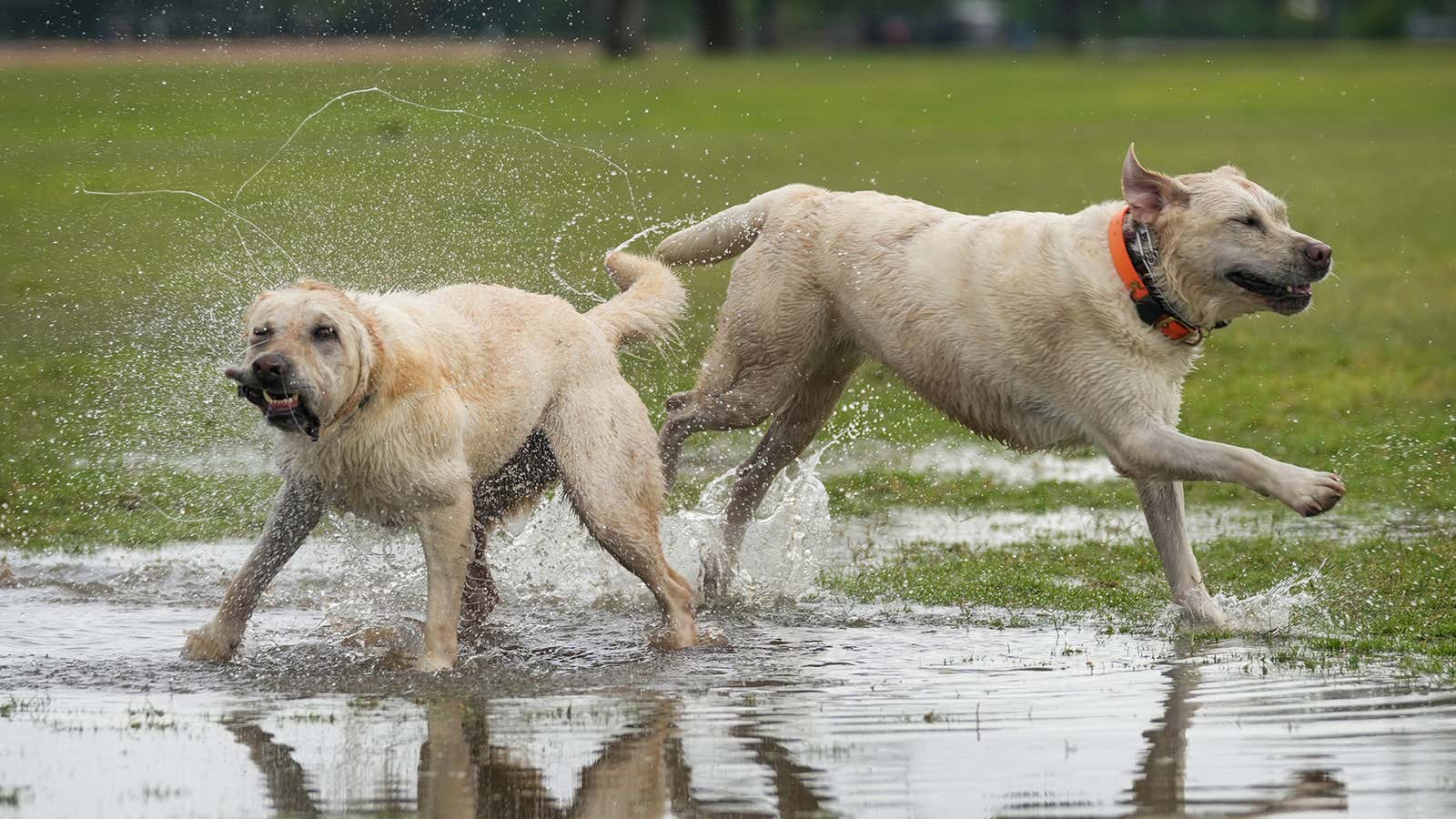
Dogs play in a water puddle after a heavy rain in Austin, Texas, on April 2, 2026.
(Jay Janner/The Austin American-Statesman via Getty Images)
After a flood event, when waters have receded, it’s easy to think that the danger has passed. But for your dog, it hasn’t.
Leptospira bacteria can stay in standing water and wet soil long after the flooding ends.
What is leptospirosis?
Leptospirosis is a disease caused by Leptospira bacteria, which can be found in contaminated water or soil, according to the Centers for Disease Control and Prevention (CDC).

It spreads through the urine of infected animals. People and animals can pick it up by coming into contact with infected urine or contaminated water.
(WATCH: How well can your dog tolerate cold temperatures?)
Slow-moving or stagnant water, such as ponds, rivers, lakes, streams and even puddles are a particular risk.
Get More of Our News on Google
Set The Weather Company as a 'Preferred Source' to get quicker access to the news you value.

After hurricanes, heavy rainfall events or flooding, the risk of leptospirosis increases, as animal urine on the ground can wash into floodwaters and rainwater.
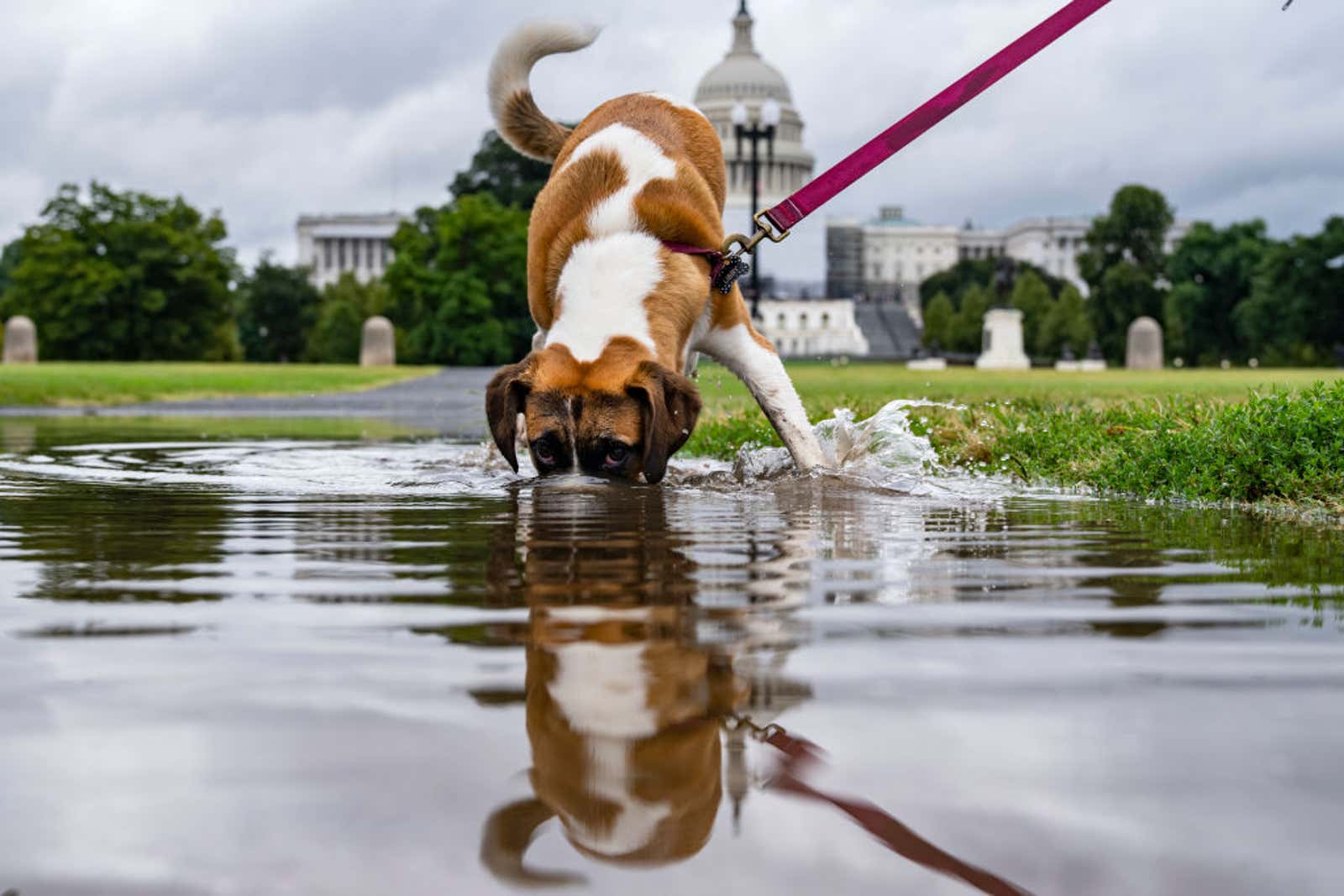
Libby, a beagle and spaniel mix, plays in a puddle in Washington, D.C., on Tuesday, September 6, 2022.
(Tom Williams/CQ-Roll Call, Inc via Getty Images)
The risk for your dog lingers
But even after the water has receded, that risk can linger for weeks, especially for your dog. The bacteria can survive in contaminated water or soil for weeks to months.
A yard or trail can look normal again, while the ground is still wet and muddy. Dogs sniff, lick, drink and wade through those leftover puddles and muddy soils, easily exposing themselves.
How to lower the risk for your dog
When headed out for a walk, choose paved or well-drained routes over low-lying trails, ditches and areas that flooded.
(WATCH: Why fall weather gives your dog more energy and zoomies)
Keep your dog on a leash so they can’t wade in puddles, ponds, mud, or slow-moving streams. Carry fresh water and a bowl during your walks, so your dog isn’t tempted to drink from puddles.
Also, ask your vet about a leptospirosis vaccine for your dog, it’s available in the U.S. However, it doesn’t provide 100% protection because there are many strains, so it works best alongside the habits above.
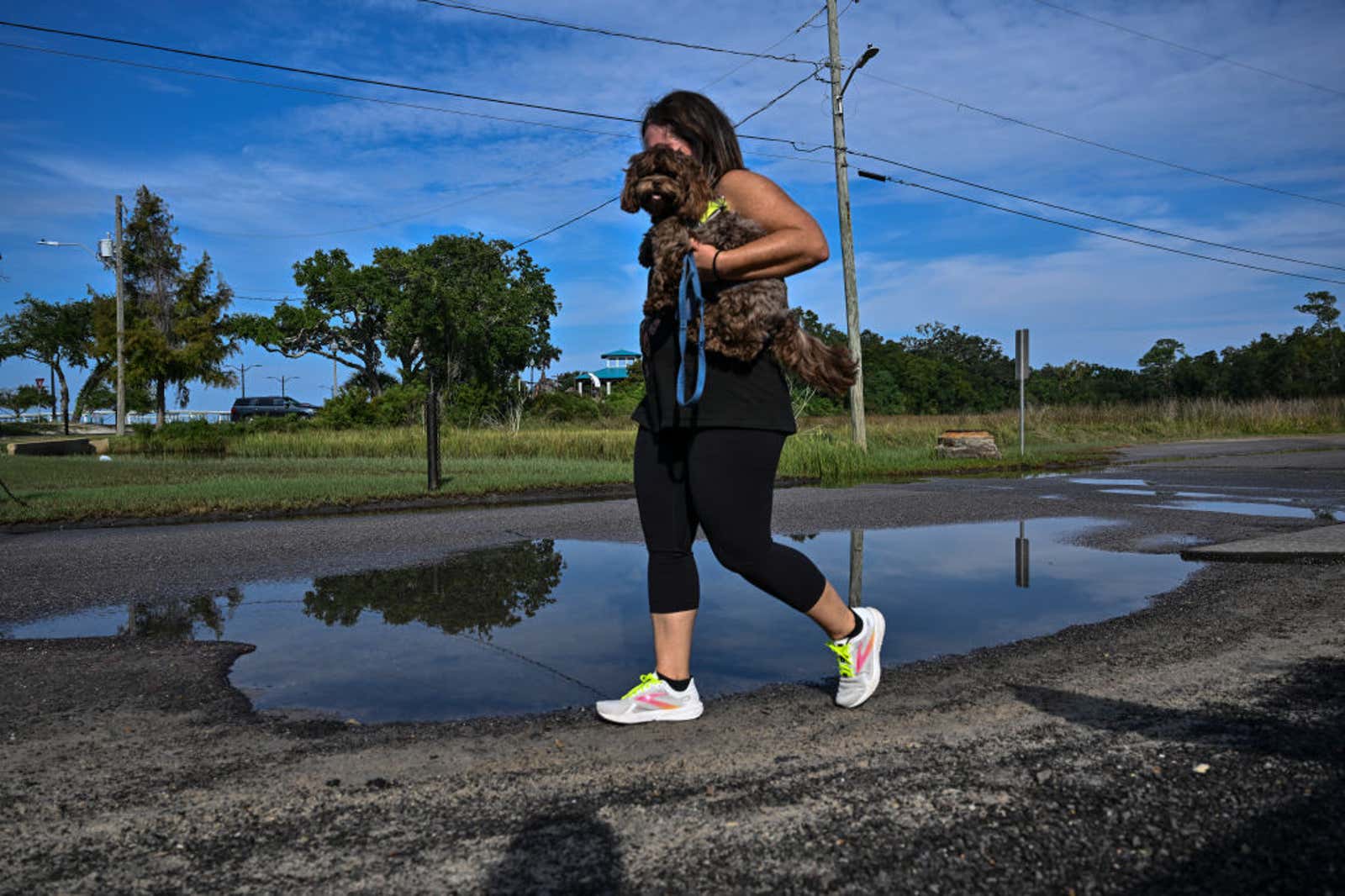
A woman and her dog walk past a partially flooded street on September 26, 2023, in Ocean Springs, Mississippi. The drainage that is supposed to drain rainwater, sits beneath the surface of the Gulf water, causing it to back up onto the streets.
(Ricky Carioti/The Washington Post via Getty Images)
Signs your dog has been contaminated
Signs vary widely, and some infected animals show no signs at all, according to the CDC. When symptoms do appear in dogs, they can include:
- Fever
- Lethargy and depression
- Loss of appetite
- Joint or muscle pain
- Changes in urination
- Jaundice (yellowing of the skin or eyes)
- Vomiting, dehydration and back pain
If you think your dog may have been exposed, or is acting sick, call your veterinarian right away. The CDC says early antibiotic treatment may speed recovery and help limit severe organ damage, though that damage can sometimes be permanent.
Overall, remember that after a flood, the risk isn’t over. Keep your dog safe by staying out of standing water and mud, even once the puddles begin to dry out.
Miriam Guthrie is an associate meteorologist with weather.com who graduated from Georgia Tech with her undergrad and graduate degrees in Earth and Atmospheric Sciences.
Loading comments...