How you can use the weather forecast to capture the perfect sunset
Cloud layers, a clear western horizon and clean air set the stage. Here's how to read the forecast for a vivid sky.

Ideal weather for a perfect sunset: What to look for in the forecast
Ever wish you knew when the sky was about to put on a spectacular show? Great sunsets can feel like luck, but they're not random.
The secret to a colorful sunset may be hiding in your daily forecast.
Start with the clouds
Clouds are what turn a plain sunset into a show. They catch the light and spread it across the sky, and their height decides what color takes over.

High clouds, like cirrus, sit above about 20,000 feet. Mid-level clouds, like altocumulus, sit between roughly 6,500 and 20,000 feet. Because they're so high, their undersides stay lit for several minutes after the sun drops below the horizon. That's why the color can peak after sunset.
Low clouds are the problem. They sit below about 6,500 feet, and when they cover much of the sky they hide the higher layers and block the light near the horizon.
What to look for in the forecast: Partly cloudy skies with high or mid-level clouds, not a solid low deck.
Get More of Our News on Google
Set The Weather Company as a 'Preferred Source' to get quicker access to the news you value.

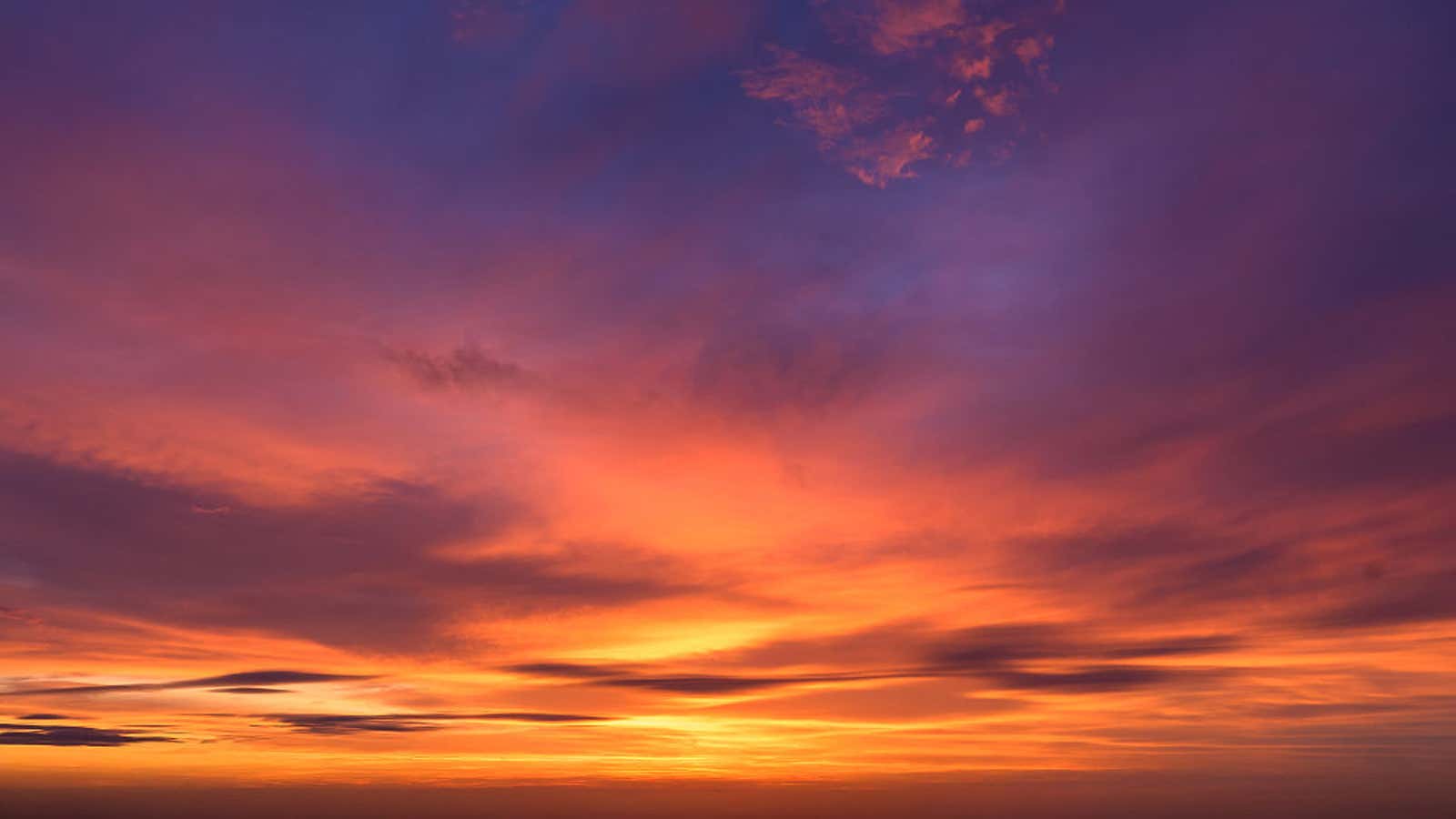
A warm sunset sky glows with rich orange and purple hues, as soft clouds spread smoothly.
(Roberto Machado Noa/Getty Images)
Check the west
Even the right clouds need the sun to reach them. At sunset, the light comes in low from the west, so what's happening on that horizon matters more than what's overhead.
If you have partly cloudy skies above and an open gap to the west, the sun can shine underneath and light the clouds from below. If a thick band of cloud sits along the western horizon, it blocks the light, and you usually get a gray ending.
Low clouds aren't always a lost cause. If the horizon is clear, they can briefly glow from underneath around sunset, though the show is short compared with high clouds.
Practical tip: Check the forecast and satellite one to two hours before sunset. Near an approaching or departing front, that western gap can open and close quickly.
(MORE: The perfect shot: Stunning sunset shines)
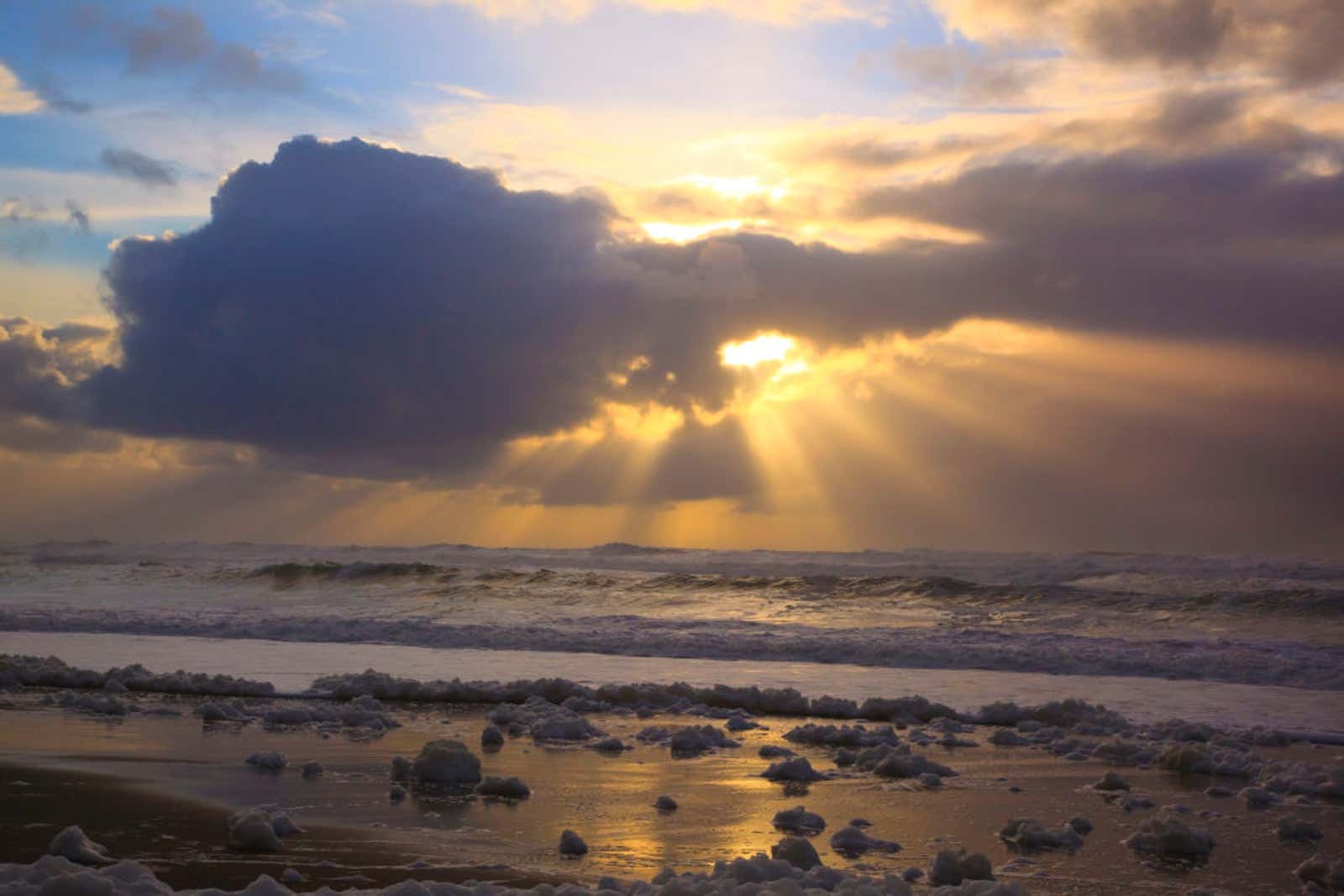
Sunlight streams through a break in the clouds near the horizon.
(Design Pics Editorial/Getty Images)
Why clear air helps
Clouds and a clear gap set the stage but the air itself determines how rich the colors look.
Clean air (Rayleigh scattering): Tiny air molecules scatter blue light most easily. At sunset, sunlight travels through much more atmosphere, so the blue gets scattered out of the beam before it reaches you. That leaves the oranges and reds.
Whenever crisp, cold air sweeps in and clears out the haze, sunset colors become noticeably sharper. If you have a few high clouds lingering behind, they catch the absolute best light.
Hazy air (Mie scattering): Larger particles like haze, dust and smoke scatter all colors more evenly. Instead of a rich gradient, you get a washed-out, whitish sky.
The blood-sun exception: When smoke or dust is in the air, the sun itself can look deep red and dim. That makes a dramatic sun but it's not the same as a vivid sky. The surrounding color is usually more muted.
Don't leave too early. High clouds often turn pink and red about 15 minutes after the sun goes down.
(MORE: The science behind why winter sunsets look brighter, bigger and more dramatic)
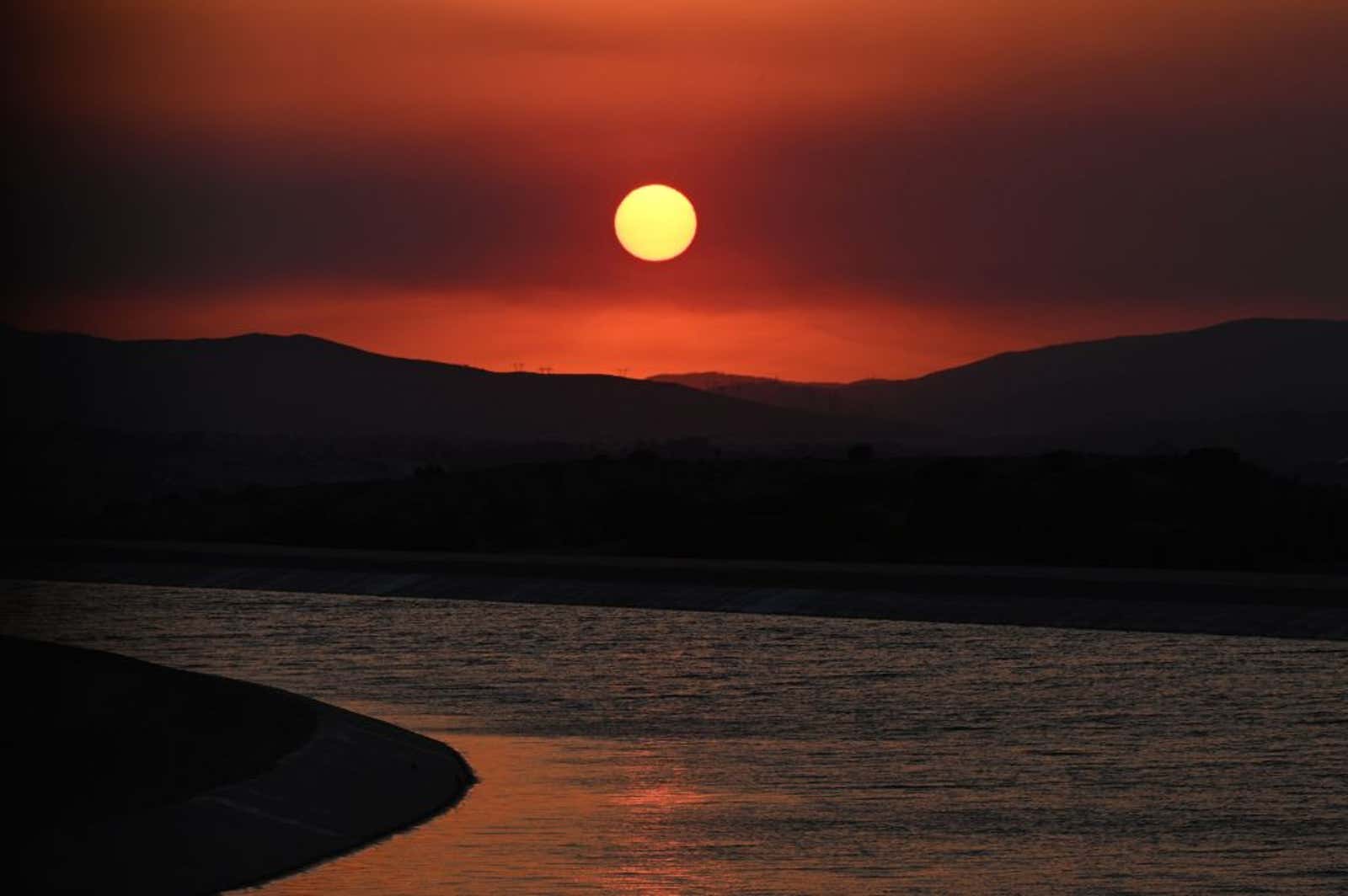
The sun sets over the California Aquedect in Palmdale, California.
(ROBYN BECK/Getty Images)
Faiza Mohammed is a meteorologist intern at weather.com. She studied geography and worked with the Weather Dawgs team at the University of Georgia. She also received her master's in Earth and Atmospheric Sciences from the Georgia Institute of Technology.
Loading comments...