Yes, you can still get sunburned in winter — and snow makes it worse
Just because it’s cold outside doesn’t mean you can’t still get sunburned. Skiers and snowboarders face the biggest risk.

You can still get sunburned in the winter: how to protect your skin
A cold, winter day doesn't feel like a day you could get sunburned. But the sun’s UV rays don't care about the temperature, and snow actually makes them harder to avoid.
A sunburn is a radiation burn. It’s your body’s inflammatory response to damage to your skin cells caused by ultraviolet rays.
That inflammation causes your blood vessels to dilate, which causes the swelling, redness and warmth you feel.

While it may be hotter outside when the UV index is high, that index is not a measure of heat. So it can be a cold, windy day in the mountains and a high UV index can leave you with a painful sunburn.
If it’s snowy, your risk of sunburn is even higher. The bright, white snow reflects UV rays back to you, so they’re hitting you twice, from above and from below. Fresh snow can nearly double your UV exposure.
(WEATHER WORDS: Albedo is the bounciness of light)
Get More of Our News on Google
Set The Weather Company as a 'Preferred Source' to get quicker access to the news you value.

And clouds don't help much either. UV rays can still pass through clouds and fog, so a gray day isn't a safe one.

Who’s most at risk from winter sun?
Skiers and snowboarders. They spend hours on bright snow at high elevation. Plus anyone at altitude. UV exposure increases with elevation, because the thinner air absorbs less UV.
Also hikers and anyone outside for long stretches on bright winter days.
Some common medications can also make skin more sensitive to sun, like ibuprofen and naproxen, certain antibiotics and some acne products. Not everyone who takes them will react, so check the label.
Is it sunburn or windburn?
Sunburn is one of the suspected causes of windburn. In fact, some skin experts use the terms interchangeably.
But other experts contend that windburn is in fact its own separate condition. It happens when your skin loses its natural oils from extreme cold, dry air.
The wind itself can reduce the amount of natural protection your skin has against UV rays. In turn, you may be more susceptible to the sun on a cold, windy day.
Regardless, both cause red, stinking, tender skin.
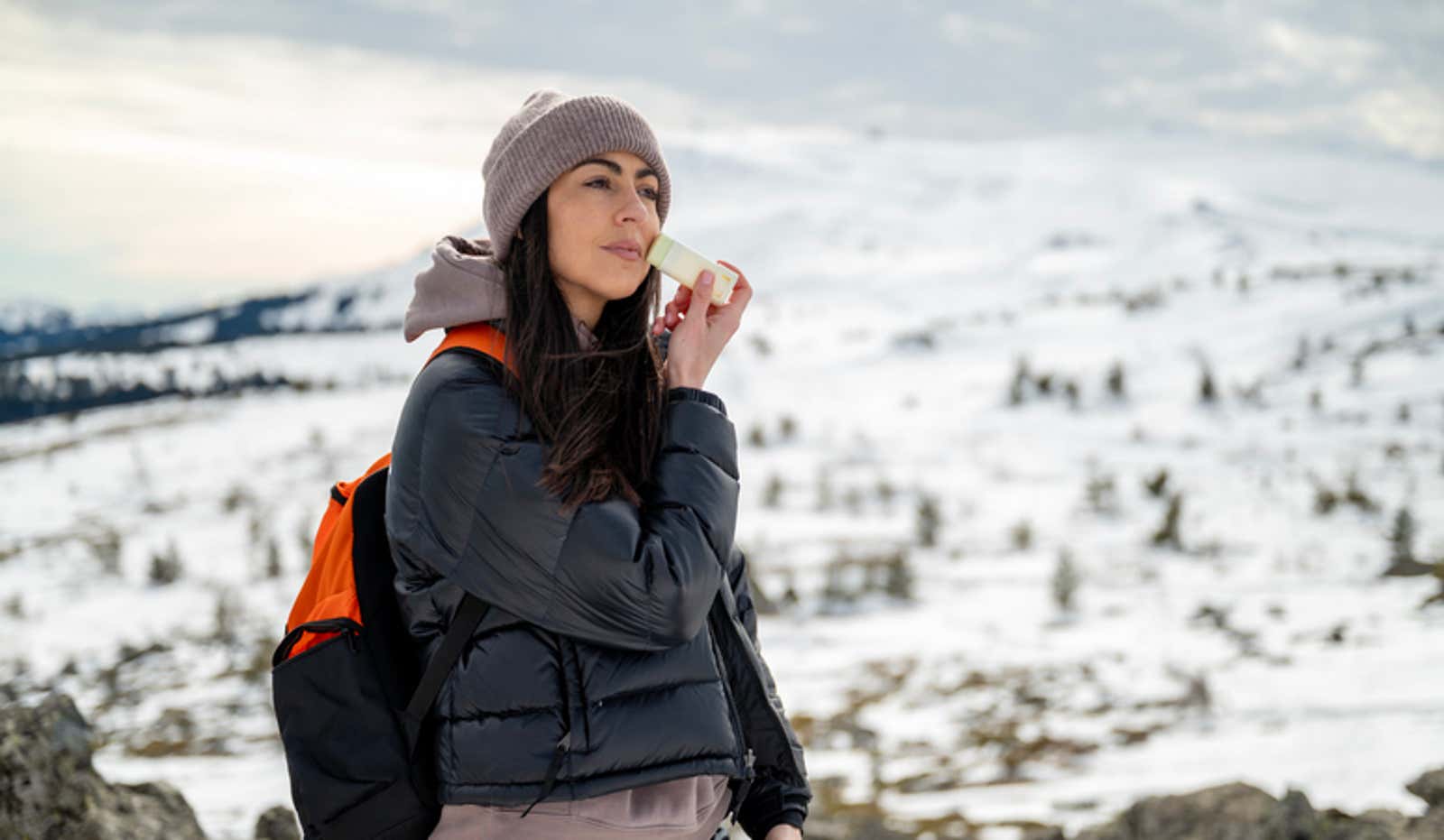
Woman applying spf sunscreen stick in the winter mountain
(bmanzurova via Getty Images)
How to protect yourself from winter sun
- Wear sunscreen every day, not just in summer. Use broad-spectrum SPF on all exposed skin, even when it's overcast. Don't forget the tops of your ears, the area around your eyes and your hairline.
- Reapply every two hours. Also reapply after sweating and at high altitude.
- Protect your lips. Use an SPF lip balm, because lips can burn too.
- Wear UV-blocking sunglasses or goggles. They protect your eyes and cut snow glare.
- Cover up. A hat or helmet, a scarf and gloves all help.
Don’t skip out on sun protection just because it’s winter.
Miriam Guthrie is an associate meteorologist with weather.com who graduated from Georgia Tech with her undergrad and graduate degrees in Earth and Atmospheric Sciences.
Loading comments...