Yellowstone in winter: What it’s like as roads close and crowds leave
Only one road stays open to cars from Gardiner to Cooke City, Montana. Trade summer crowds for snowcoaches and steam.

Yellowstone goes quiet: what winter looks like when the crowds leave
Starting Nov. 1, Yellowstone National Park goes quiet for the winter season. Most roads, and three entrances, close to regular vehicles, and the summer crowds disappear.
But winter here isn't closed — it's transformed. Steam drifts through freezing air at the hot springs, snow blankets the meadows and bison walk the empty roads.
If you're planning a trip, or just dreaming of one, here's what to know.

Only one road stays open to cars
The park's West, South and East entrances close to regular vehicles on Nov. 1, and most park roads close with them.
One route stays open all winter, weather permitting. It runs from the North Entrance at Gardiner, Montana, through Mammoth Hot Springs and Tower Junction to the Northeast Entrance near Cooke City and Silver Gate, Montana. It also passes through Lamar Valley.
Roads can close at any time without notice, so check conditions before you leave. The park advises keeping your gas tank full and carrying blankets and cold-weather gear.
Get More of Our News on Google
Set The Weather Company as a 'Preferred Source' to get quicker access to the news you value.

See the rest of the park by snowcoach or snowmobile
Oversnow travel opens on most other park roads starting Dec. 15 and runs through mid-March. Exact end dates vary by road, and dates can change with the weather.
Guided tours are the way to see Old Faithful in winter. Snowmobiling without a commercial guide requires a permit through the park, so you should book ahead if that’s what you want to do.
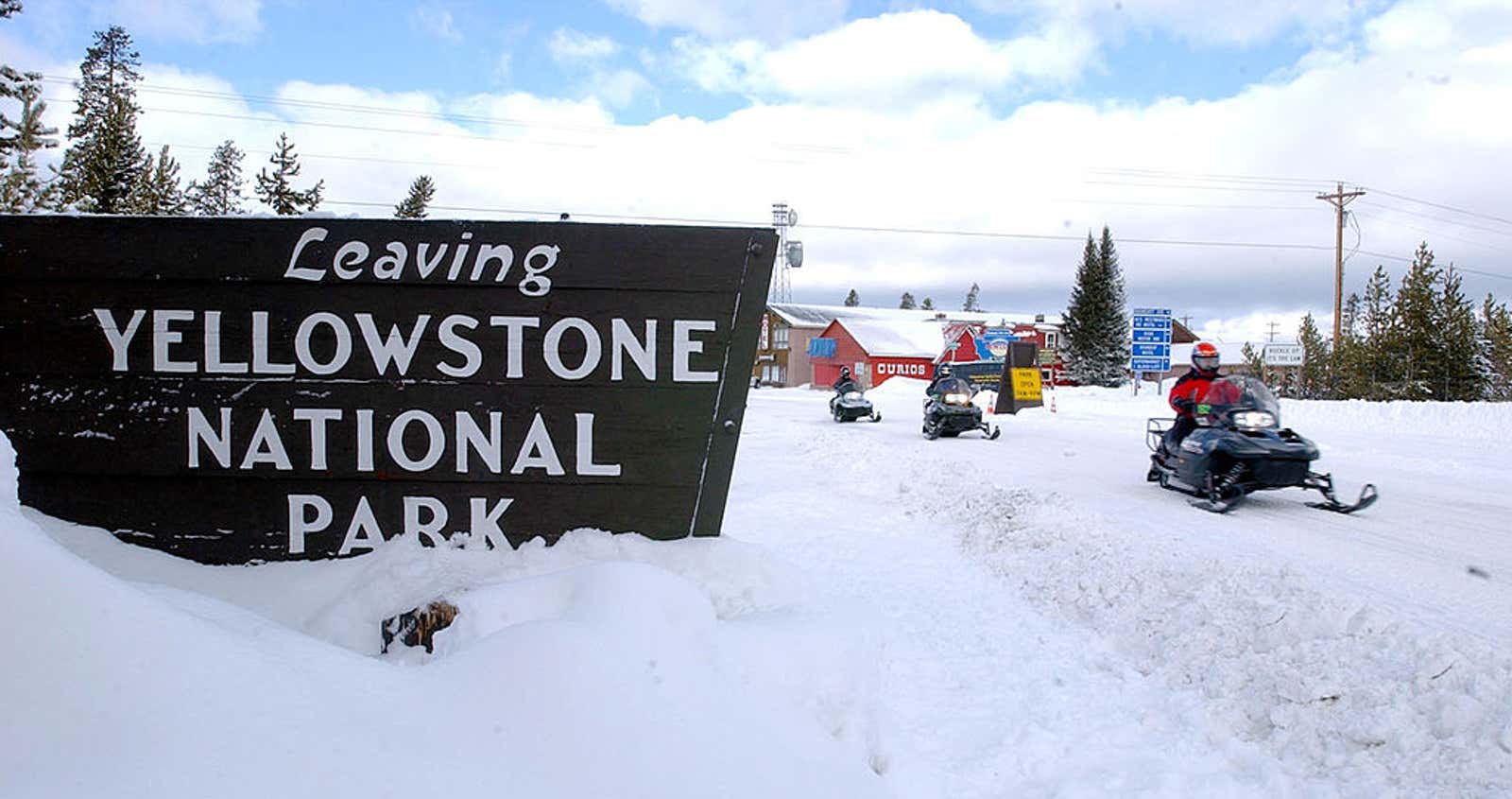
A trio of snowmobilers enter Yellowstone National Park on Feb. 17, 2003, in West Yellowstone, Montana.
(Bill Schaefer via Getty Images)
What the weather is like
Daytime temperatures run roughly from 0 to 20 degrees Fahrenheit in much of the park, and subzero nights are common, especially at higher elevations. High winds and blowing snow can also be threats this time of year, cutting visibility and making roads harder to drive.
Average temperatures vary by location. In January, Mammoth Hot Springs averages a high of 32 degrees and a low of 12. Yellowstone Lake averages 23 degrees and 1, and gets about 35 inches of snow that month, compared with about 10 inches at Mammoth.
Where to stay
Only two lodges stay open in the winter: Old Faithful Snow Lodge and Mammoth Hot Springs Hotel. It’s recommended to reserve far in advance.
Mammoth Campground is the only camping option in the winter, and it's first-come, first-served. But you have to be prepared for winter camping conditions.
Gateway communities in Montana, Wyoming and Idaho stay open year-round and have rooms, too.
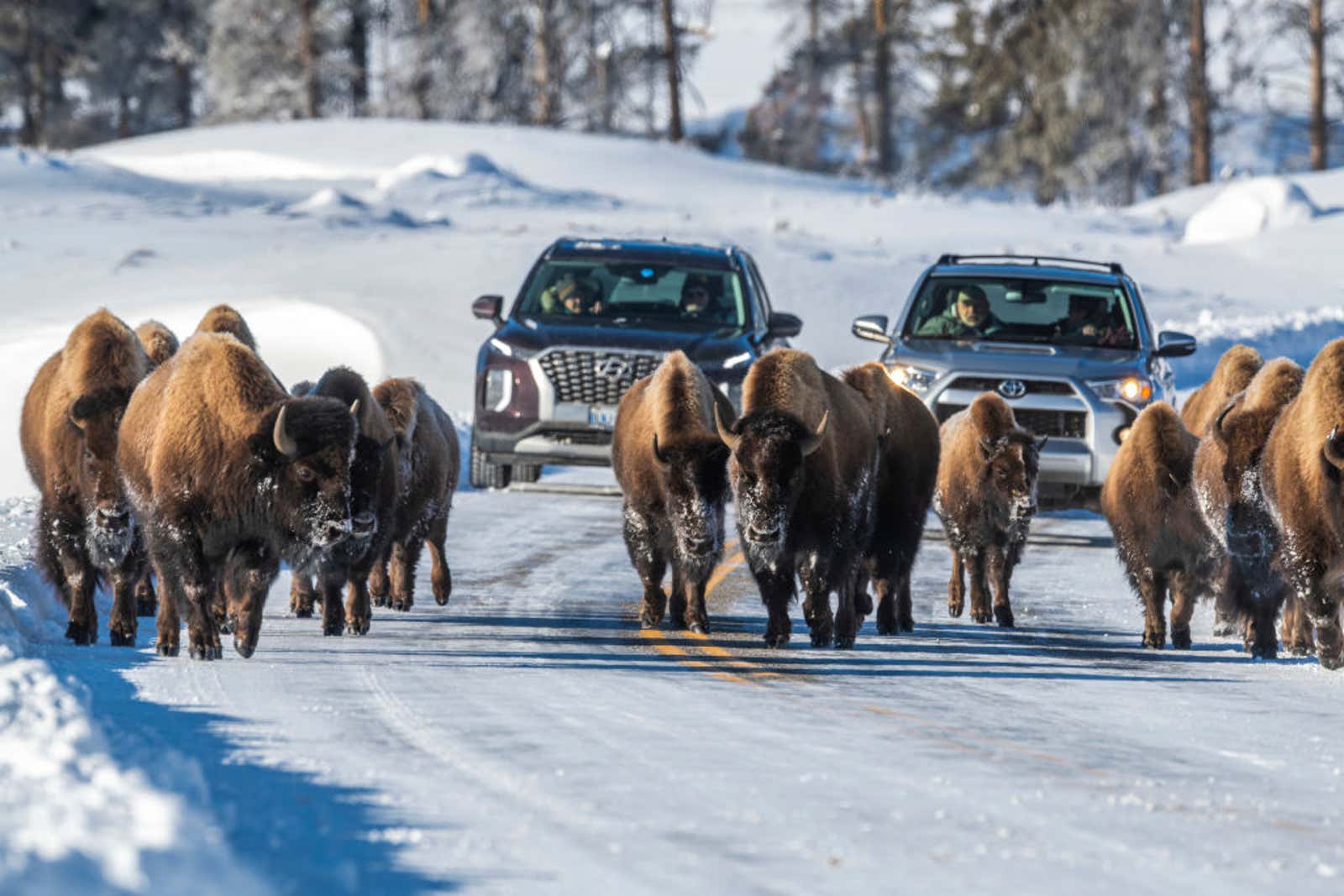
A herd of American bison are seen walking down the middle of the highway in winter holding up traffic in Yellowstone National Park, Wyoming.
(Tom Murphy/Design Pics Editorial/Universal Images Group via Getty Images)
What you might see
Wolves, coyotes and foxes hunt the snowy meadows. Trumpeter swans and American dippers gather where rivers stay open. Thermal areas show rime ice and steam inversions. In December, bighorn sheep are in rut.
Bison often use the roads and always have the right of way. Slow down or pull over, and never stop, stand or walk on the road.
Planning checklist
- Check road conditions before you go.
- Book a guide for oversnow travel and lodging early.
- Pack layers, traction aids and emergency supplies.
- Download offline maps and the NPS app.
- Keep your plans flexible.
Loading comments...