What's the weather like at America's newest national park?
With its towering rock spires and gravity-defying boulders, Chiricahua National Park is one to add to your list.

America just got a new national park, and now is the time to visit
America has a brand new national park, and its landscape is unlike anything you've seen before.
Chiricahua National Monument in southeastern Arizona officially became the nation's 64th national park on Tuesday, Oct. 20, marking the first addition in nearly six years and Arizona's fourth national park, joining the Grand Canyon, Petrified Forest and Saguaro.
And if towering rock spires, gravity-defying boulders and dazzling night skies sound like your kind of adventure, this place deserves a spot on your travel list.

What to know before visiting
The park's otherworldly formations were created by a massive volcanic eruption about 27 million years ago.
(MORE: Best national park for fall? Great Smoky Mountains)
Today, the jagged rhyolite rocks rise from a mountainous landscape known as a "sky island," where desert, grassland and forest ecosystems collide. That mix creates a surprising variety of wildlife and plant life in one place.
Get More of Our News on Google
Set The Weather Company as a 'Preferred Source' to get quicker access to the news you value.

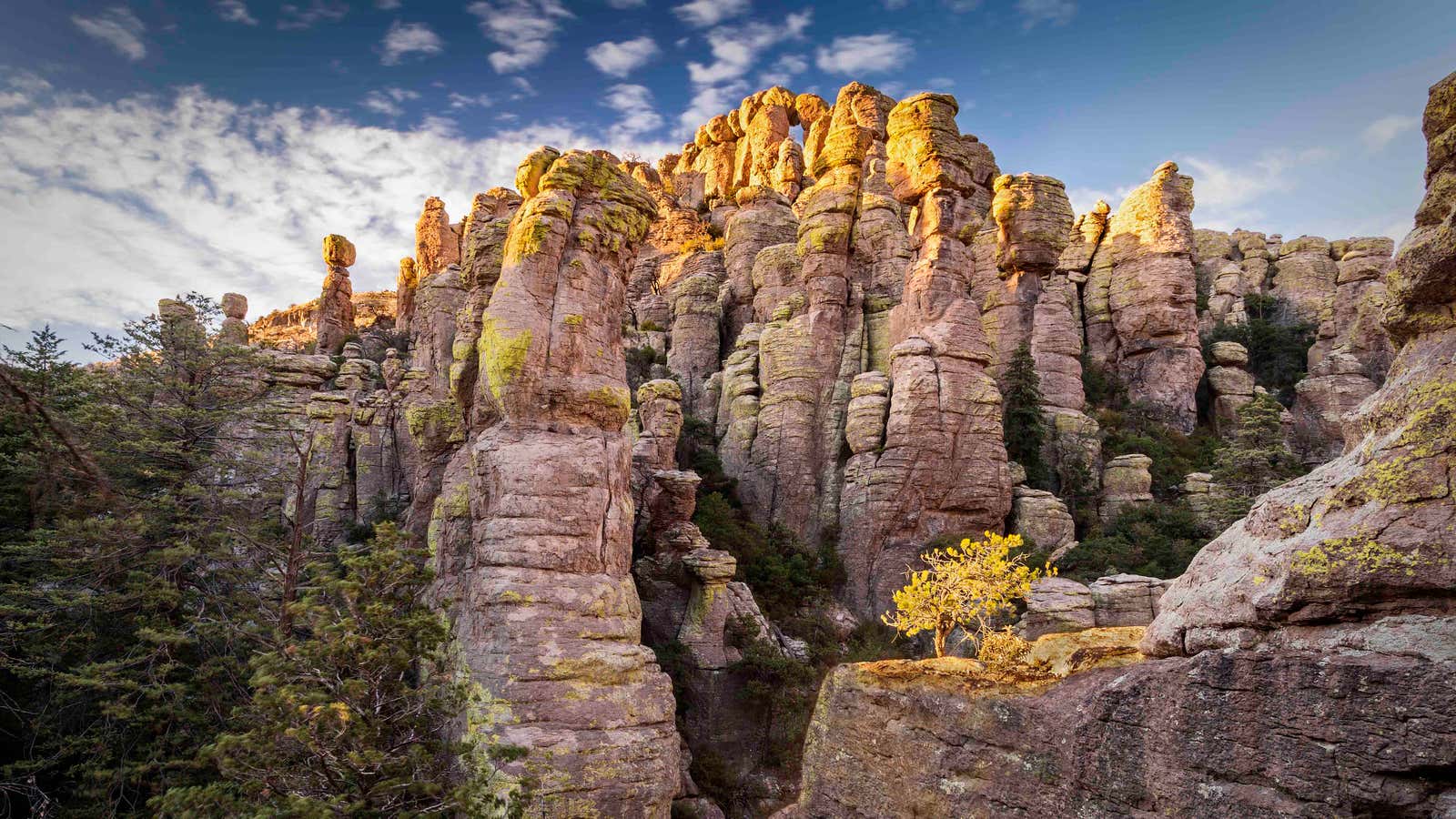
Sunset along the Echo Canyon hiking trail among hoodoos and rock pillars at Chiricahua National Park near Wilcox, Arizona.
(Getty Images/iStockphoto)
After a day exploring the trails, stick around after dark. Chiricahua is a certified International Dark Sky Park, making it a spectacular destination for stargazing far from city lights.
Planning your trip
Fall is a particularly good time to plan a visit. Arizona's summer heat and rain are winding down, making October and November a great opportunity to explore the outdoors before winter weather arrives.
"October and November mornings can start out in the upper 30s and 40s, but temperatures can climb into the 60s and 70s by the heart of the day," notes weather.com meteorologist Caitlin Kaiser.
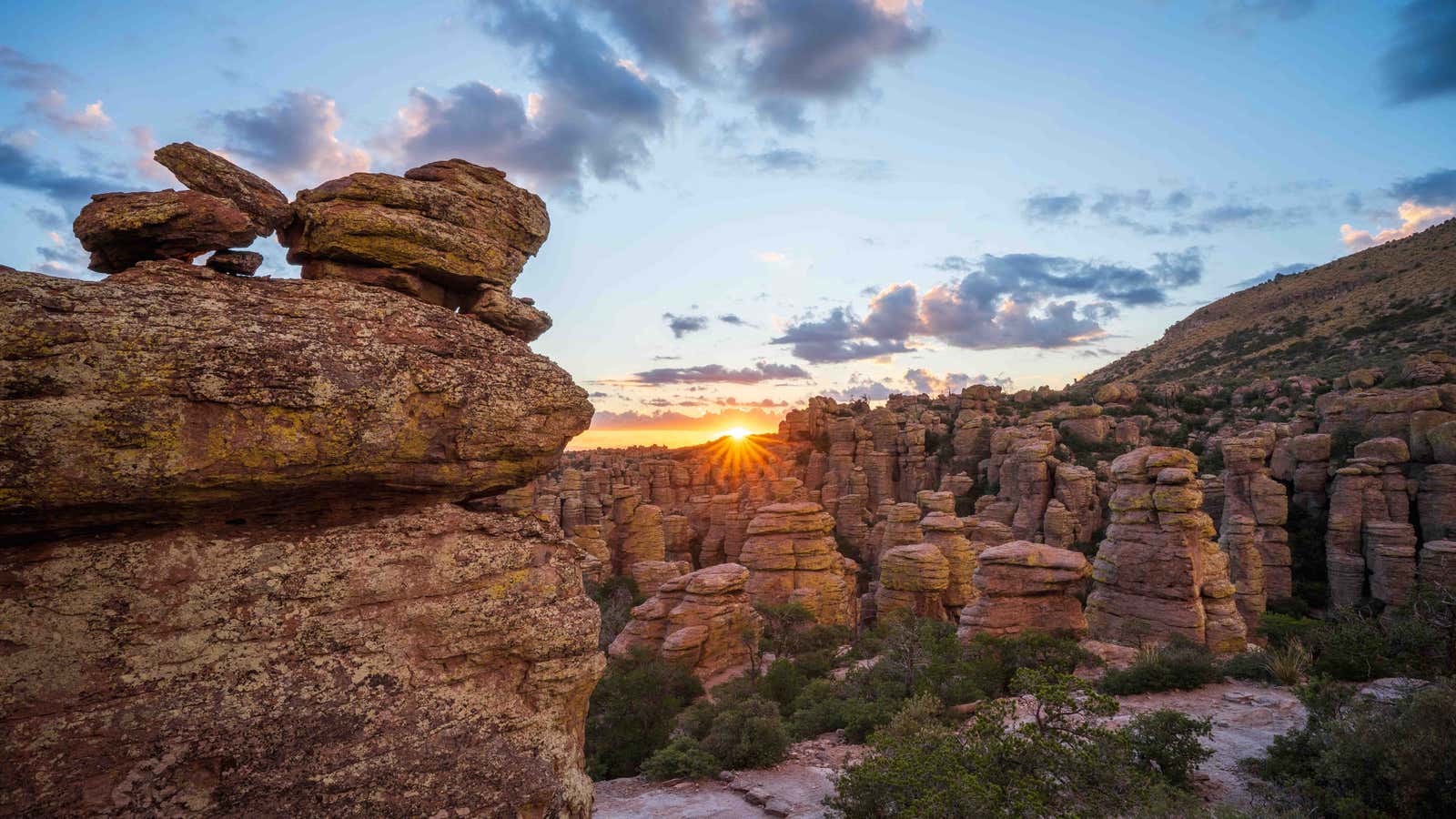
Monsoon sunset over the rhyolite rock hoodoos of Chiricahua National Park.
(Getty Images)
The park's higher elevations also tend to stay cooler than many Arizona cities, ranging from 5,124 feet at the entrance to 7,310 feet atop Sugarloaf Mountain.
(MORE: When Death Valley finally becomes cool enough to enjoy)
Those peaks can be 5 to 10 degrees cooler and windier than at the park's visitor center, so Kaiser recommends packing layers even when the forecast looks warm.
Winter visitors should prepare for freezing temperatures, snow and icy trails, warns Kaiser, particularly from January through March.
With its dramatic geology, diverse ecosystems and incredible night skies, Chiricahua offers a fresh reason to explore Arizona's wild side. Just remember to pack for the mountains, not only the desert.
Loading comments...